Tactical dehydration is a readiness problem
For decades, military aviators have deliberately restricted water because bladder relief in the cockpit wasn’t good enough. As missions grow longer, that workaround is becoming a human-performance problem the military can no longer ignore.
Military aviation has spent decades extending the performance of the aircraft.
Fighters fly farther. Bombers stay airborne for more than a day. Helicopters carry additional fuel and operate across increasingly long mission profiles.
But the human being inside the aircraft still has the same basic physiological requirements.
Drink.
Eat.
Rest.
Relieve yourself.
For too many military aviators, one of those requirements has historically been easier to avoid than solve.
So they stop drinking.
The U.S. Air Force has a name for it: tactical dehydration.
Air Force officials have publicly acknowledged that aircrew routinely restrict fluid intake because available bladder-relief options have not been optimized for long-duration sorties.
What can sound like an inconvenience is actually something much more consequential.
Tactical dehydration is a readiness problem.
The workaround became the culture.
Ask military aviators how they manage bladder relief and the answers have historically been remarkably consistent.
Hold it.
Drink less.
Use a relief device if absolutely necessary.
Accept the possibility of a leak or mess.
For fighter pilots, the geometry of the cockpit makes the problem even more difficult. Aircrew are strapped into ejection seats beneath harnesses, survival equipment and flight gear, with little room to move.
During Air Force F-35 testing, pilots described existing options as difficult to use and, in some cases, requiring them to unbuckle their safety harness to get into position.
The alternative became simple:
Don’t drink enough to need the system.
And over time, that workaround became normalized.
The aircraft keeps getting better. The problem keeps getting bigger.
Today’s missions are making that approach increasingly difficult to sustain.
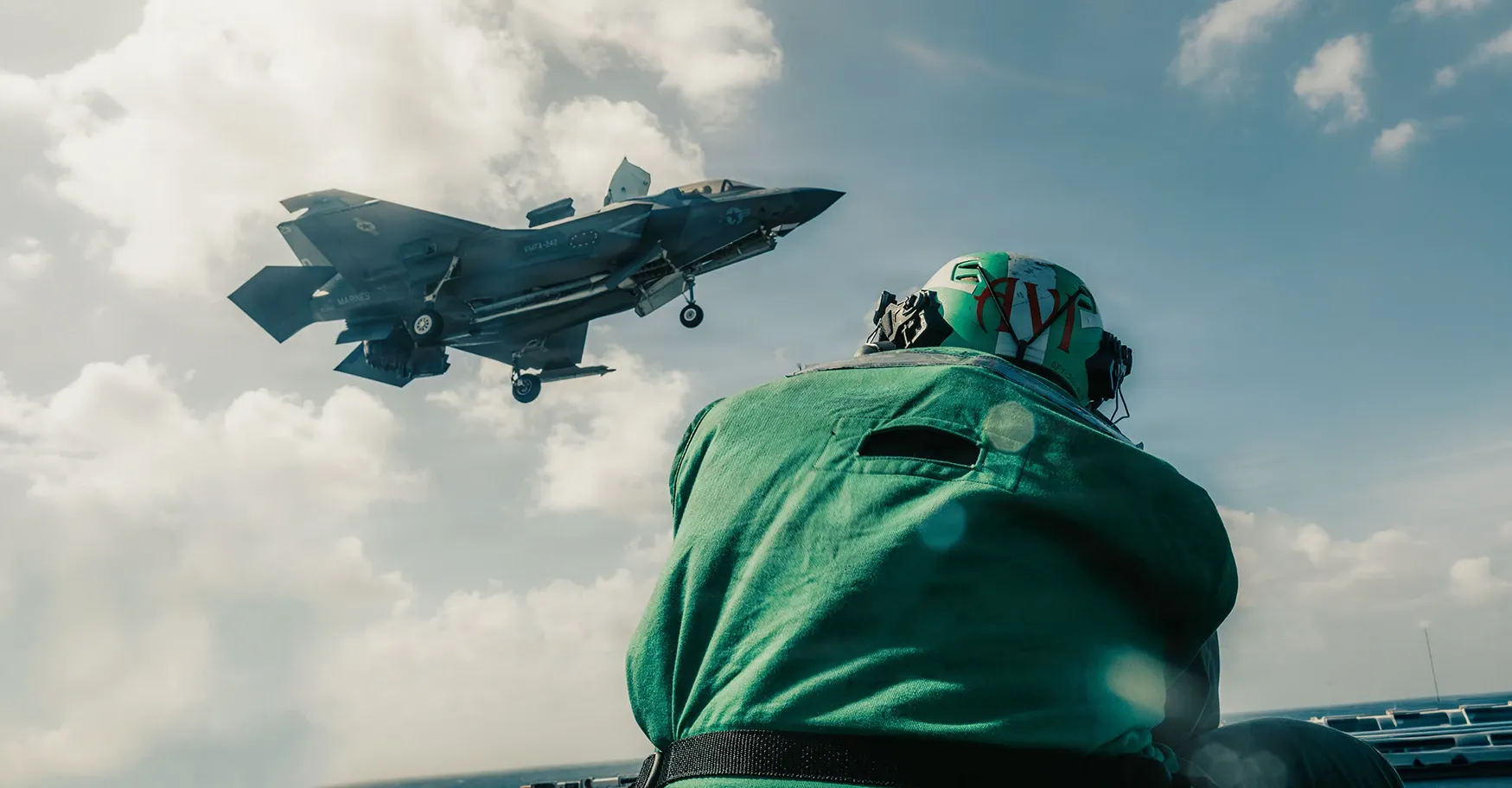
A fighter sortie can stretch for hours with aerial refueling.
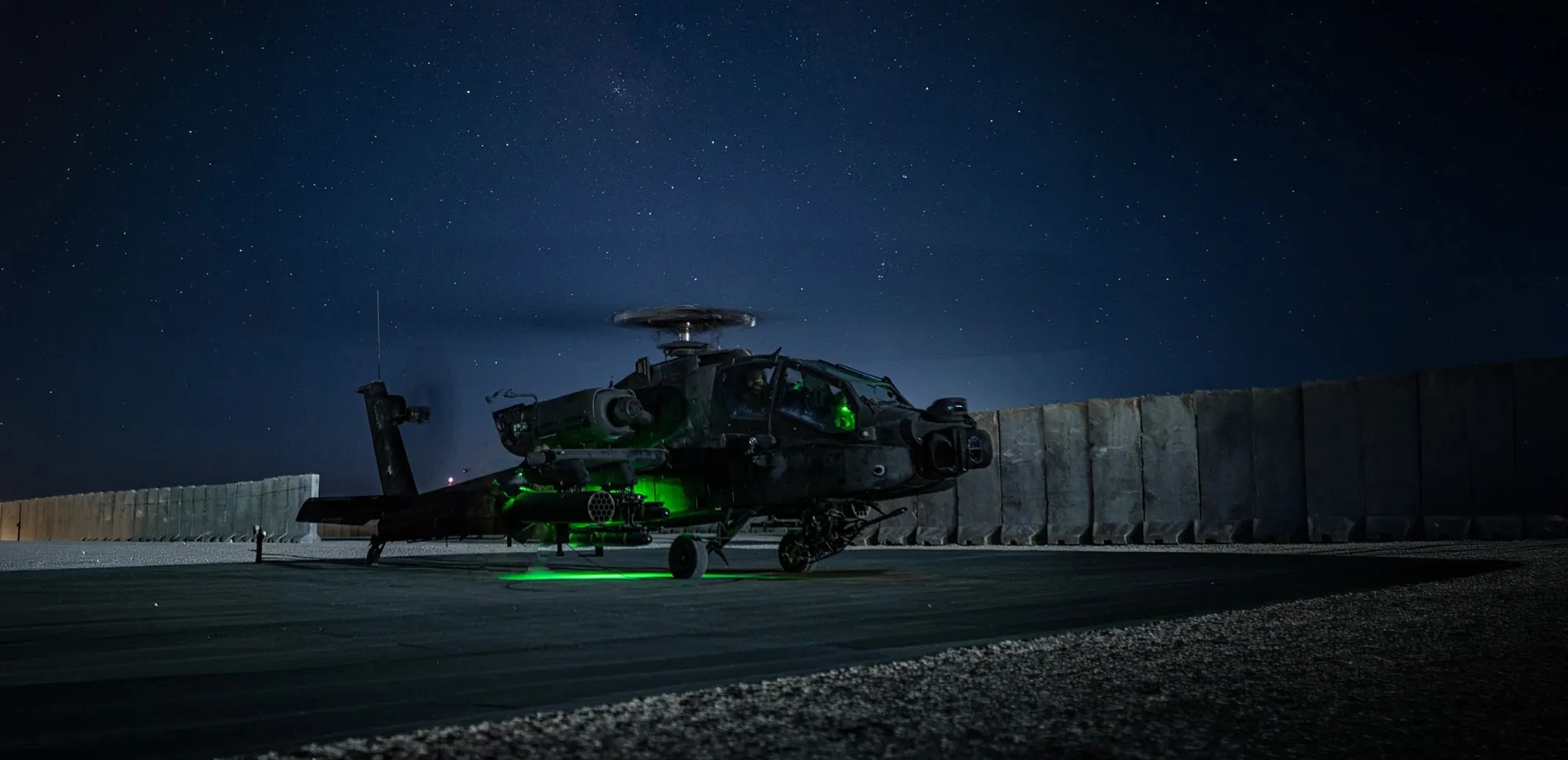
Rotary-wing aircraft are increasing mission endurance through extended-range fuel systems and aerial refueling.
Bombers can remain airborne for extraordinary lengths of time. The Air Force has flown B-1 missions exceeding 24 hours, while B-2 combat sorties have historically stretched toward 30 hours or longer.
As aircraft endurance increases, the idea that an aviator can simply avoid drinking until landing becomes increasingly disconnected from the mission.
We have spent billions of dollars engineering aircraft to fly farther and stay airborne longer. The human inside that aircraft has to be able to go the same distance. Hydration and bladder relief have to be treated as part of human performance.
Dehydration changes how a pilot performs.
The concern isn’t theoretical.
Controlled research involving pilots has found that dehydration can negatively affect flight performance and spatial cognition.
Military aviation demands sustained attention, rapid decision-making, spatial awareness and physical performance—often while aircrew are simultaneously managing heat, restrictive flight equipment, fatigue and high workload.
The pilot may therefore be reducing performance before the aircraft ever leaves the ground simply because they are trying to avoid needing bladder relief later in the mission.
In a fighter, dehydration meets G-force.
For high-performance fighter pilots, there is another physiological concern.
G-tolerance.
Maintaining blood flow to the brain under high +Gz forces is already one of the most physically demanding things a fighter pilot does.
Dehydration can make that challenge harder.
Research examining dehydration and acceleration has shown reductions in G-tolerance under dehydrated conditions. In one study, a high-tolerance subgroup experiencing approximately 3% dehydration saw average sustained time at +7 G fall from 60 seconds to 35 seconds.
That does not mean dehydration automatically results in G-induced loss of consciousness.
It does mean hydration status is another factor affecting the body’s ability to perform in an already extreme physiological environment.
Hydration is part of flight performance.
For women, the problem has been even harder to solve.
Female aircrew have historically faced even fewer workable bladder-relief options.
For some pilots, the practical choices have been to hold it, deliberately reduce fluid intake, or attempt to use a system that wasn’t adequately designed around female anatomy or the realities of the cockpit.
Holding urine for extended periods also carries potential health implications.
Research involving active-duty servicewomen found that deliberately delaying urination during deployment was associated with increased odds of urinary tract infection.
That research was not specific to fighter pilots or a particular bladder-relief system, but it reinforces a larger point:
Regularly suppressing a basic physiological need should not be treated as an acceptable part of military aviation.
Female fitment also can’t be solved by simply scaling an interface smaller or expecting every pilot to fit the same geometry.
The way a system sits against the body matters.
How it feels when seated matters.
How it interacts with the flight suit, harness and G-suit matters.
And most importantly, whether the pilot trusts the system enough to drink normally matters.
For female pilots, fit isn’t a small detail—it determines whether the system is something they’ll actually trust and use. If a pilot is worried about leaks, pressure points or whether the interface will work when she needs it, she’s still going to change her hydration behavior. Our job is to remove that concern completely.
AIRUS approaches female fitment around the individual pilot rather than a single universal shape, with multiple interface geometries designed to be evaluated while seated and configured in the same position in which the system will actually be used.
For years, pilots were expected to adapt themselves around the limitations of the equipment. From an engineering standpoint, we looked at that completely differently. The system should adapt to the human—how they’re seated, how they’re restrained, what they’re wearing and what their body actually needs over a long mission.
The better answer is to adapt the equipment around the pilot.
Give pilots a system they actually want to use.
Research provides evidence that better bladder-relief options can change hydration behavior.
In one study of fighter pilots flying sorties of approximately six hours, 90% of pilots studied were hypohydrated before flight when they did not have access to a usable urinary-relief system.
When a relief system was available, that proportion dropped to 29%, while pilots increased their inflight food and water intake.
That’s an important distinction.
Pilots weren’t necessarily avoiding hydration because they didn’t understand its importance.
They were adapting their behavior to the bladder-relief problem.
Give the pilot an adequate solution, and the behavior can change.
Bladder relief is human-performance equipment.
That is the larger idea behind AIRUS.
AIRUS was developed around a different premise: bladder relief shouldn’t require the pilot to choose between hydration, comfort and mission focus.
A system should work while the pilot remains strapped in.
It should work for male and female aircrew.
It should integrate with the seat, harness and flight equipment.
It should evacuate fluid quickly and reliably.
And it should be comfortable enough that an aviator is actually willing to wear and use it through an extended mission.
Because the objective isn’t simply to build a better way to urinate in an aircraft.
The objective is to remove a reason pilots deliberately dehydrate themselves in the first place.
Readiness starts with the human.
Military aviation is entering an era of longer-range operations.
Aircraft are carrying more fuel. Aerial refueling extends missions even further. Bombers are demonstrating global reach. Rotary-wing platforms are increasing endurance. Future operations are placing greater demands on the people inside those aircraft.
Every additional hour airborne increases the importance of human performance.
Hydration isn’t a luxury.
Bladder relief isn’t simply a quality-of-life issue.
And deliberately dehydrating an aviator because the alternative is an inadequate relief system should not be considered an acceptable operational workaround.
Tactical dehydration shouldn’t be part of the mission plan. If a pilot is drinking less because they don’t trust their bladder-relief system, the equipment has failed the operator before the mission even begins.
The aircraft has evolved.
The mission has evolved.
It’s time for bladder relief to evolve with them.
- Hypohydrated pre-flight
- 90% without a usable relief system, 29% with one
- G-tolerance at +7 G
- 60 seconds to 35 seconds at ~3% dehydration
- Longest sorties
- B-1 over 24 hours; B-2 toward 30 hours or longer
- tactical dehydration
- AIRUS
- AIRION
- aircrew hydration
- G-tolerance
- in-flight bladder relief
- female aircrew equipment
- human performance